
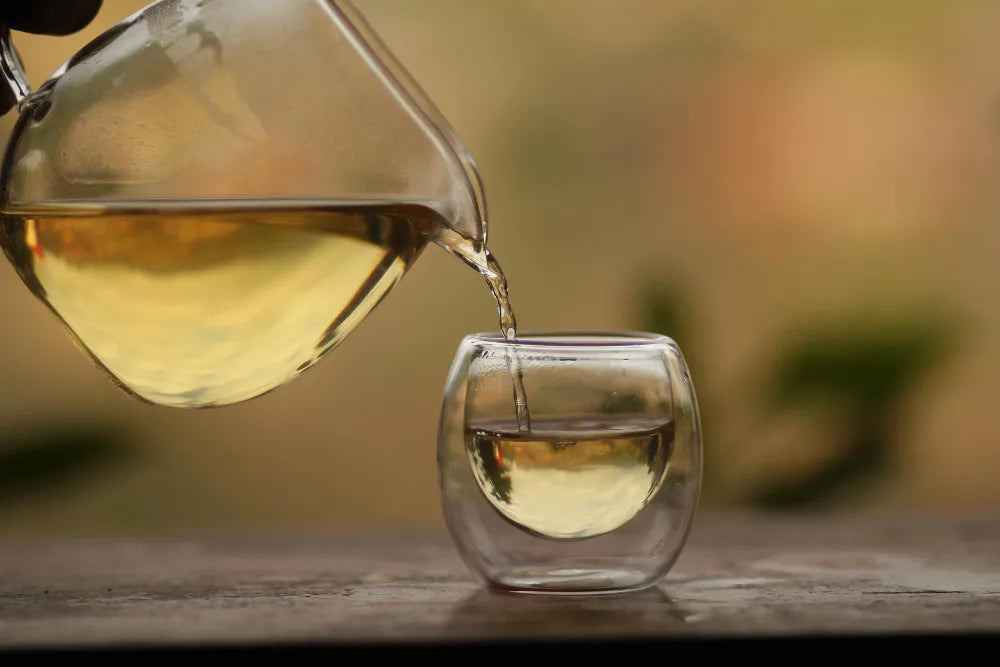
How Much Caffeine Is in White Tea?
If you are a tea lover, you might be familiar with several categories of tea available all around the world.
One popular variety in this group is white tea which is known for its unique processing and harvesting. This tea has a rich flavor and amazing health properties. It also has less caffeine than other teas.
In this guide, we will take a closer look at the exact caffeine content found in white tea.
Also, we will compare it to other beverages so that you can get all the essential information about your favorite tea.
What Is White Tea and How Much Caffeine Does It Have?

White tea is the least processed type of tea and is made from the leaves of the Camellia sinensis plant. It has a light and slightly sweet flavor. One cup of white tea offers you 15 to 30 milligrams of caffeine content.
White tea can offer you a lot of benefits like:
- It may support your heart health.
- It can boost your immune system.
- It can help with skin health.
- It may help you in weight management.
Different Types of White Tea and Their Caffeine Levels
White tea has mainly four categories. Let’s have a look at them:
1. Silver Needle (Bai Hao Yin Zhen)
Silver Needle is the finest and most expensive type of white tea. It has the highest caffeine content among white teas that ranges from 20 to 30 milligrams per 8 oz cup.
2. White Peony (Bai Mu Dan)
The flavor of White Peony is stronger than Silver Needle and has slightly more caffeine. Its caffeine level ranges between 18 to 25 milligrams per 8 oz cup.
3. Shou Mei
Shou Mei still has less caffeine than black tea, but it contains a bit more than Silver Needle or White Peony. It has 20 to 30 milligrams of caffeine per 8-oz cup.
4. Gong Mei
Gong Mei has a mild flavor with a caffeine content similar to Shou Mei that ranges between 15 to 25 milligrams per 8 oz cup.
Factors That Affect the Caffeine Content in White Tea

Different factors influence the amount of caffeine in white tea. These include brewing time, temperature, the size and grade of the leaves, and whether you use loose leaf or bagged tea.
-
Brewing Time and Temperature
White tea releases more caffeine when you brew it for longer. It also extracts more caffeine if you brew it at a higher temperature.
You should brew your white tea for 2-3 minutes using water between 160°F to 170°F if you want lower caffeine levels.
-
Leaf Grade and Size
The size and quality of the tea leaves impact how much caffeine is released. Smaller tea leaves release higher caffeine in less time.
On the other hand, larger leaves generally release caffeine more slowly.
-
Growing Conditions
The environment where the tea grows may also affect caffeine content. Tea plants grown in areas with more sunlight and nutrients may have higher caffeine levels.
Additionally, younger tea leaves tend to have more caffeine than older leaves.
-
Loose Leaf vs. Bagged Tea
Loose leaf tea is of higher quality and may have a slightly lower caffeine content than bagged tea. Because bagged tea contains smaller leaves, it releases caffeine more quickly.
Comparing Caffeine Content: White Tea vs. Other Beverages
If you are sensitive to caffeine or simply trying to reduce your daily intake of it, you must know the difference between caffeine levels offered by different beverages. Here is a quick comparison:
|
Beverage |
Caffeine Content (per 8 oz) |
|
White Tea |
15 – 30 mg |
|
Green Tea |
25 – 35 mg |
|
Black Tea |
40 – 70 mg |
|
Coffee |
95 – 200 mg |
|
Espresso |
~63 mg per 1 oz shot |
|
Soda (Cola) |
20 – 40 mg |
As you can see, white tea caffeine levels are relatively low compared to most common beverages. That is why it is an excellent option if you are seeking a steady source of energy. It supports better hydration and gentler digestion as compared to soda or coffee.
Conclusion
If you want to enjoy mild stimulation without the intensity of coffee or black tea, white tea is the best option. By adjusting factors like steeping time, water temperature, and leaf quantity, you can fine-tune your cup to suit your personal caffeine needs.
White tea is a balanced alternative that supports well-being and mindful consumption. All in all, it is just the right solution if you want flavor, health benefits, and gentle energy all in one cup.
FAQs
Is there any way to reduce caffeine in white tea?
You can reduce the caffeine in your white tea by brewing it for around 2-3 minutes. Also, use water at a lower temperature (160°F to 170°F). You can also steep the tea once, discard the water, and steep again to reduce caffeine.
What are the side effects of drinking white tea?
White tea is safe for most people and has the least side effects. However, drinking excessive amounts may cause stomach problems due to its tannin content.
Does white tea caffeine level change by brand?
Caffeine content may vary slightly depending on the brand and the quality of the leaves used. It is always helpful to check the packaging for more specific information about the caffeine content of the particular brand you are using.